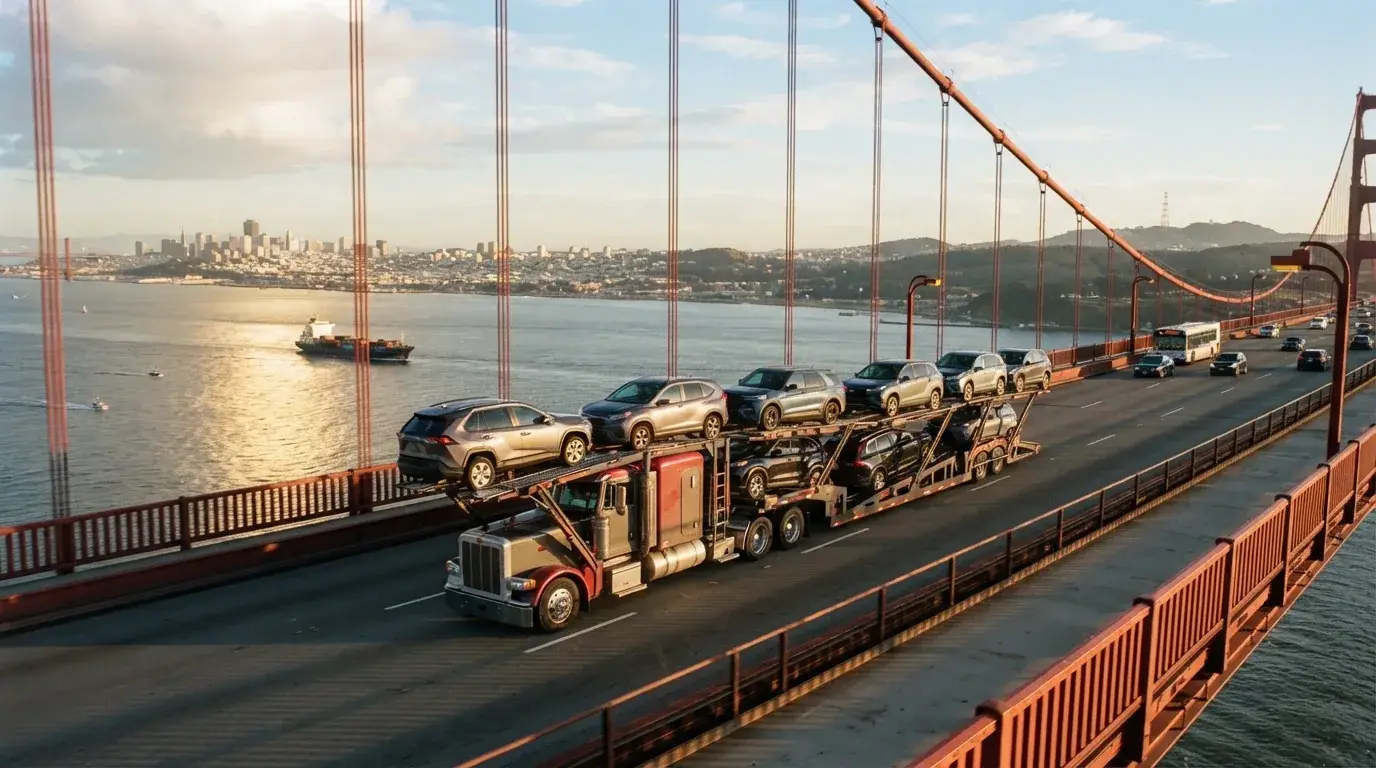
How long does it take to ship a car? Add the wait for a truck, usually a few days after your first available date, to the drive itself: one to two days on short hops and seven to ten days coast to coast. Short moves often wrap up inside a week.
Transit time by distance
These windows come from the 168 routes on our car shipping routes page, each measured in road miles. They're planning figures, not a promise; the window for your own two addresses comes on the call.
| Distance | Days in transit | Example route |
|---|---|---|
| Under 750 miles | 1 to 4 days (most 2 to 3 days) | Madison to Chicago, 155 miles, 1 to 2 days |
| 750 to 1,250 miles | 2 to 6 days (most 3 to 5 days) | Dallas to Atlanta, 780 miles, 2 to 4 days |
| 1,250 to 1,750 miles | 4 to 7 days (most 4 to 6 days) | New York City to Miami, 1,280 miles, 4 to 6 days |
| 1,750 to 2,250 miles | 4 to 8 days (most 5 to 8 days) | Phoenix to Chicago, 1,785 miles, 4 to 7 days |
| 2,250 to 2,750 miles | 5 to 10 days (most 7 to 10 days) | Detroit to Los Angeles, 2,290 miles, 6 to 9 days |
| Over 2,750 miles | 7 to 10 days (most 7 to 10 days) | Los Angeles to New York City, 2,805 miles, 7 to 10 days |
Why a car hauler rarely tops 500 miles a day
Federal hours-of-service rules let a truck driver drive up to 11 hours after 10 hours off duty, all inside a 14-hour window, with a 30-minute break after 8 hours behind the wheel. A car hauler also stops to load and unload the other cars on the trailer, often seven to ten of them, plus fuel, weigh stations and city traffic at each end. Put together, a car hauler rarely covers more than about 500 miles in a day, and a coast-to-coast load averages less once the stops are counted.
That's also why expedited vehicle shipping shortens the wait for a truck, not the drive.
What sets the wait before pickup
A carrier fills the trailer before it leaves, so the wait depends on how easily your car fits a load already heading your way.
- A car between two big metros on I-95, I-10 or I-40 usually joins a load quickly, while a rural pickup two hours off the interstate waits for a truck that has other cars nearby.
- A pickup window of several days fits more trucks than one fixed day.
- There are fewer enclosed trucks than open ones, so classic car shipping on an enclosed trailer usually means a longer wait. A car that won't start needs a truck with a winch; non-running car shipping explains what that takes.
- Snowbird weeks in the fall and spring and the summer moving peak tighten trucks on the busiest roads. The best time of year to ship a car shows when.
What pushes a delivery date back
The delivery date is a window because the truck is carrying other people's cars. If one customer up the road isn't ready, everyone after them waits. Winter closures on I-80 in Wyoming and I-70 in Colorado, and hurricane season on the Gulf and Atlantic coasts from June through November, add days on those roads. A breakdown or a roadside inspection can cost a day too.
The driver usually calls ahead before delivery, so keep your phone on through the last day or two of the window.
Planning a move around the window
- If you need the car the day you arrive, have it picked up a few days before you leave, so it isn't the last thing on your timeline. Moving car shipping covers timing it around the moving truck.
- If nobody will be home at delivery, name someone who can meet the truck, check the car and sign the Bill of Lading.
- If the date can't move, such as a report date on PCS orders, say so at the start of the call. Military car shipping covers those moves.
- If the car is crossing the country, cross-country car shipping covers the long routes in more detail.
For everything between the call and the delivery signature, see how car shipping works. Weighing the drive yourself? Shipping, driving or the Auto Train compares the time each one takes.