Nationwide service
Non-Running Car Shipping, Winched On and Off
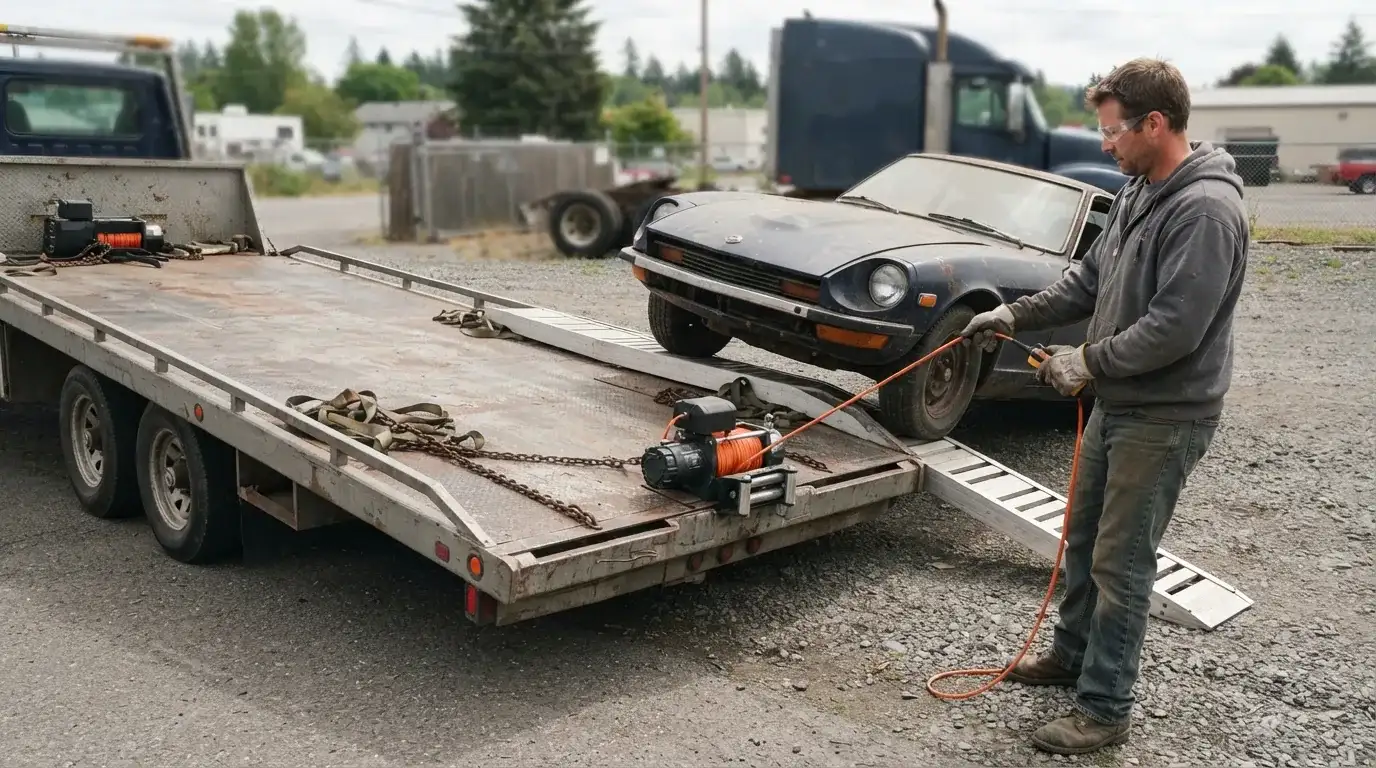
If the wheels turn, a winch pulls it aboard; if not, dollies or a forklift do. Either way, the drop gets planned so it can come off.
Call to ship
Non-Running Car Shipping
Speak with a transport specialist. No forms, just call.
Phone lines Mon to Fri 8AM to 8PM, Sat 9AM to 5PM EST
What the car can still do decides the truck
Non-running car shipping moves a vehicle that won't start or can't be driven onto the trailer: a project car, an auction or insurance-yard purchase, an estate car, or a breakdown far from home. Auto Transport Pros covers inoperable vehicle transport in all 50 states, on carriers with a winch for loading and room to unload at your address.
If the wheels turn, a winch on the trailer pulls the car up the ramp while the driver steers it into place. If a wheel is locked, a tire won't hold air or the transmission is stuck in park, the car has to be lifted or set on wheel dollies, and that takes a forklift or a truck carrying that gear. That's why the first questions on the call are about the wheels, not the engine.
Steering matters on the way up and brakes on the way down. A locked steering column needs the key in the car. A car with no brakes comes off the deck held on the winch cable instead of rolling down under control. Few of these rule a car out. They change which truck comes and how long loading takes, and both show up in the rate.
The delivery end needs the same planning. A running car can be driven a block to wherever the truck can stop. A non-runner can't, so the drop has to be somewhere the car can come straight off the truck onto pavement: a driveway, a shop's lot, or a street wide enough to winch it off. If it's going to a repair shop, give us the shop's hours so the drop lands while someone is there to take the keys.
Before pickup day, can I ship a car that doesn't run? walks through what to declare and how to get the car ready.
Auction and insurance-yard pickups
Cars bought at salvage and insurance auctions sit in yards with their own rules. The yard hands the car over only against the buyer's release, many yards load it onto the truck with their own loader, and storage charges start once the yard's grace period runs out. Have the lot or stock number, the release and the yard's address ready when you call. The sooner the truck is on the calendar, the fewer storage days pile up. Shipping a car you bought covers dealer and private sales too.
Salvage titles, missing parts and flood cars
A salvage or rebuilt title doesn't stop a car from shipping, but how it sits changes the loading. A car with no engine rides light and nose-high, a car missing a wheel can't roll, and a flood car often has brakes rusted tight. Describe the car as it sits today, including fluid leaks, because a car that drips usually rides on the lower deck.
A non-runner on an enclosed trailer
A stored classic or a non-running exotic can still ship enclosed. The lift gate raises the car level and the winch pulls it in, so a car that won't start never has to climb a ramp. Classic car shipping covers clearance and tie-downs for those cars.
Cars that ship as non-runners
- Cars that won't start, from a dead battery to a seized engine
- Auction and insurance-yard purchases, including salvage titles
- Project cars, barn finds and estate vehicles that have sat for years
- Accident-damaged cars that still roll on all four wheels
- Breakdowns stranded far from home or from the shop that will fix them
Before the truck arrives
- Tires aired up enough to roll
- Loose bumpers, hoods and doors tied down so nothing swings on the winch
- A clear path to the car, not boxed in at the back of a garage or a yard
Non-running car shipping questions
Does a non-running car cost more to ship?
What if the car starts with a jump?
Can a car ship without keys?
Find your state for non-running car shipping
- Alabama
- Alaska
- Arizona
- Arkansas
- California
- Colorado
- Connecticut
- Delaware
- Florida
- Georgia
- Hawaii
- Idaho
Get the non-runner on a truck
The first minutes of the call cover where the car sits, whether the wheels turn and where it's going, and the rate comes on that same call.